



Green Pea Building
Home / Green Pea Building
-
Location:
Turin, Italy
-
Date:
2020 (Completion)
-
Category:
Sustainable Retail Park, LEED Certification, Systems Engineering
Project Overview
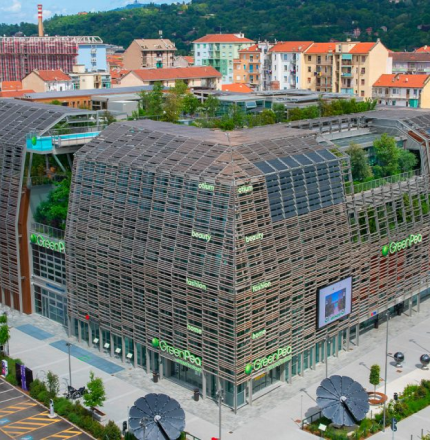
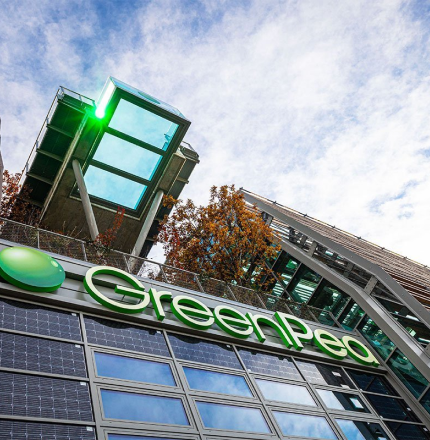
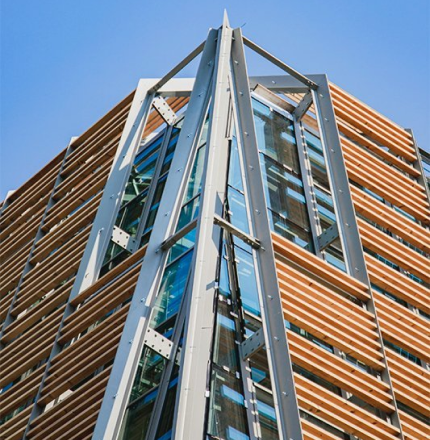
The Green Pea Building in Turin, Italy, is Italy’s first five-storey green retail park, completed in 2020. This landmark development successfully blends commercial and leisure spaces with pioneering sustainable design. It features retail outlets, restaurants, exhibition areas, and leisure zones focused on eco-conscious living. The building incorporates renewable energy systems, green rooftops, and advanced water management to achieve high energy efficiency, minimal environmental impact, and exceeding international green building certifications like LEED.
Key Challenges & Solutions
-
Integration of Environmental Systems
Integrating complex environmental technologies like solar, water recycling, and green roofing while maintaining public utility. Solution: Employed multidisciplinary coordination to achieve seamless system balance and functionality.
-
Structural Engineering for Green Roofs
Structural design needed to handle the significant added weight of vegetated roofing systems. Solution: Executed special load-bearing calculations and integrated structural reinforcements to ensure safety and design integrity.
-
Constrained Urban Site Logistics
Construction within Turin’s dense city environment complicated access, deliveries, and material staging. Solution: Implemented phased scheduling and just-in-time delivery to maintain project momentum and minimize public disruption.
-
Evolving Sustainability Regulations
Adhering to complex local, regional, and international sustainability standards (e.g., LEED). Solution: Continuous monitoring and proactive adherence to new standards, ensuring compliance without cost or timeline inflation.
Outcome
The project was delivered on-time and on-budget, becoming a successful case study in sustainable construction. The Green Pea Building achieved LEED compliance and other environmental certifications, demonstrating superior energy, water, and material efficiency. Post-construction, it has shown reduced operating costs and has gained architectural and civic recognition as a benchmark for urban sustainability and a community hub for environmental awareness.